


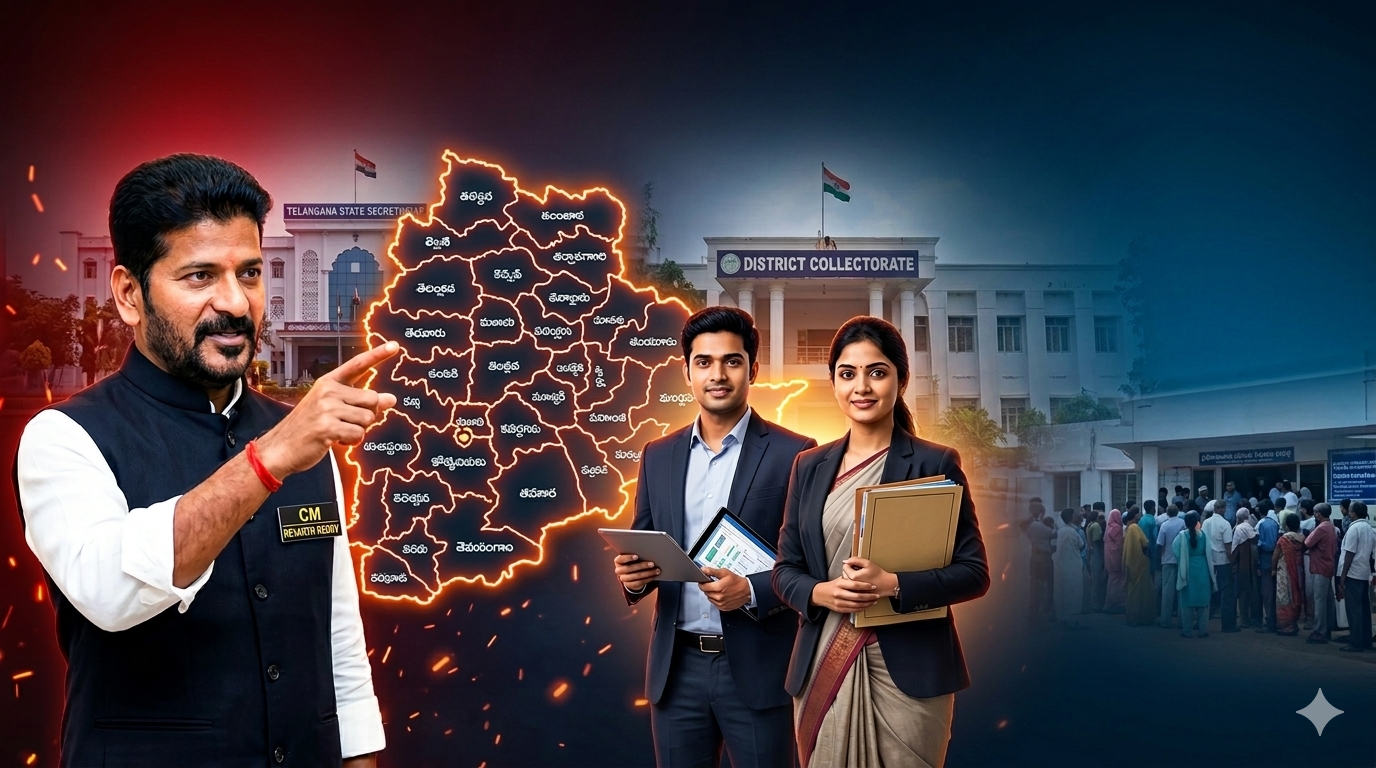
The functioning of district collectors in Telangana has come under scrutiny in recent times. Many people say their problems are not being resolved quickly, while the government has also expressed dissatisfaction with the performance of some collectors.
With frequent reviews by the ruling establishment, the work of district collectors is said to be under close watch. Frequent transfers have also created uncertainty among IAS officers.
After the Telangana government increased the number of districts from 10 to 33, young IAS officers got more opportunities to serve as district collectors. The move was expected to bring administration closer to the people and speed up problem-solving. However, public and political opinion on the results has been mixed.
Though the government conducts regular performance reviews, there is a growing view that political influence in district administration has increased. Earlier, officials were believed to take decisions more independently. Even after the formation of new districts, some people say administrative changes have not been fully visible. They complain that files are not moving faster and corruption has not completely reduced.
People say that when they visit collector offices to present their problems, they are often told that officials are in meetings or attending ministerial programs. They are usually asked to attend the weekly grievance cell held on Mondays. Even after going there, some say they are directed to meet Tahsildars and their issues remain unresolved.
Despite reviews conducted by ministers and the chief minister, questions are being raised about whether these meetings are leading to clear improvements in administration. In this context, some people are asking what benefits have come from the creation of new districts.
Officials, however, say the situation is not the same in all districts. Compared to many other states in India, Telangana has given young IAS officers the chance to become collectors within a shorter period. Normally it takes about 10 to 15 years for an IAS officer to become a district collector, but in Telangana some officers have been appointed within two or three years of service.
There are also officers who are trying to work sincerely in public service. However, some officials say increasing political involvement has limited their ability to take independent decisions.
Mulugu District Collector Diwakar T.S. has taken several initiatives to address problems in tribal areas. Since permanent buildings are difficult in remote tribal hamlets, container hospitals and container schools were arranged to meet immediate needs.
Mulugu, which is known as a tourist district, has also seen development efforts aimed at attracting visitors. With coordination from different departments, several tourism-related initiatives have been implemented. Development works for the recent Medaram Jatara were also completed in time.
According to reports, the work of Mulugu Collector Diwakar T.S. was appreciated by Chief Minister Revanth Reddy and some ministers. There was also discussion that when a minister attempted to seek his transfer to another district, Minister Seethakka opposed the move.
Hyderabad District Collector Hari Chandana Das, IAS has also drawn attention for administrative innovations. She has introduced data-based decision making at the district level and gained positive feedback from the public.
To reduce the need for people to repeatedly visit government offices, administrative systems need to become more accessible. One example is the QR code feedback system introduced in Hyderabad district in October 2025. Through this system, citizens can give real-time feedback on staff behaviour and the speed of problem resolution.
Officials say such systems can improve the efficiency of government services. Many people also feel that issues should be resolved faster through such mechanisms.
Women IAS officers have also gained recognition for their work. Pamela Satpathy, who served as Karimnagar Collector, tried to connect government programs with people and understand local issues during her tenure. However, her transfer within a short period led to some dissatisfaction among residents.
There was also discussion that the transfer may have been linked to the BJP’s victory in the Karimnagar Municipal Corporation elections.
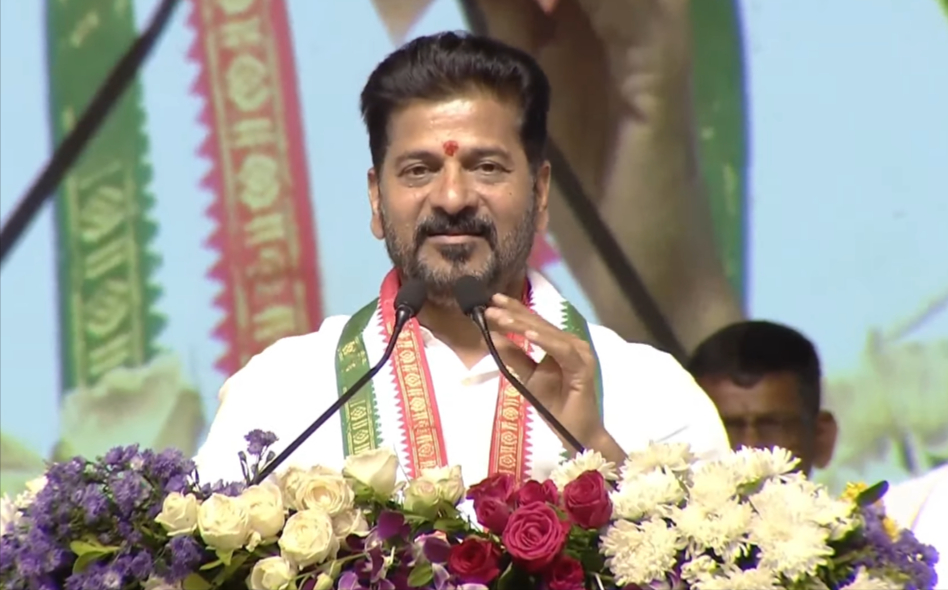
Recently, Chief Minister Revanth Reddy stated that the government is reviewing the performance of IAS officers. Critics say such statements show the increasing influence of the government over district administration.
Senior BRS leader T. Harish Rao alleged that frequent transfers are affecting governance. According to him, in February 2026 about 140 IAS officers and 20 district collectors were transferred. He said such changes can slow down administrative work and delay the resolution of public issues.
Reports from a performance evaluation conducted in May 2025 indicate that many collectors scored only around 50 to 55 percent in the assessment.
Another issue is the shortage of IAS officers in the state. Telangana requires about 66 IAS officers in key positions, but the full sanctioned strength has not yet been allocated by the central government.
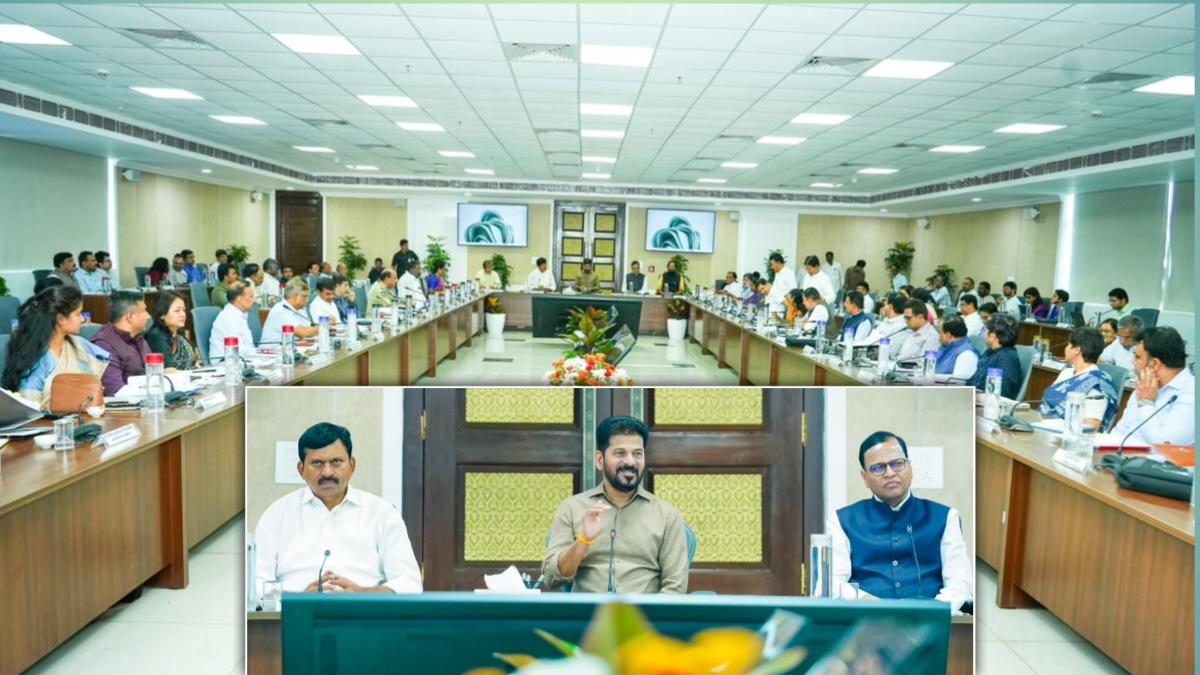
Chief Minister Revanth Reddy is expected to review the performance of collectors again at a meeting scheduled for the end of March. Officials have been asked to focus more on field visits and direct resolution of public problems.
Many observers say that along with addressing the shortage of IAS officers, the government should also reduce frequent transfers and expand public feedback systems.
Across political parties, there is also a view within administrative circles that collectors now have less freedom to take independent decisions. Some officials say there is concern that ignoring political instructions could lead to transfers to less favourable postings.